

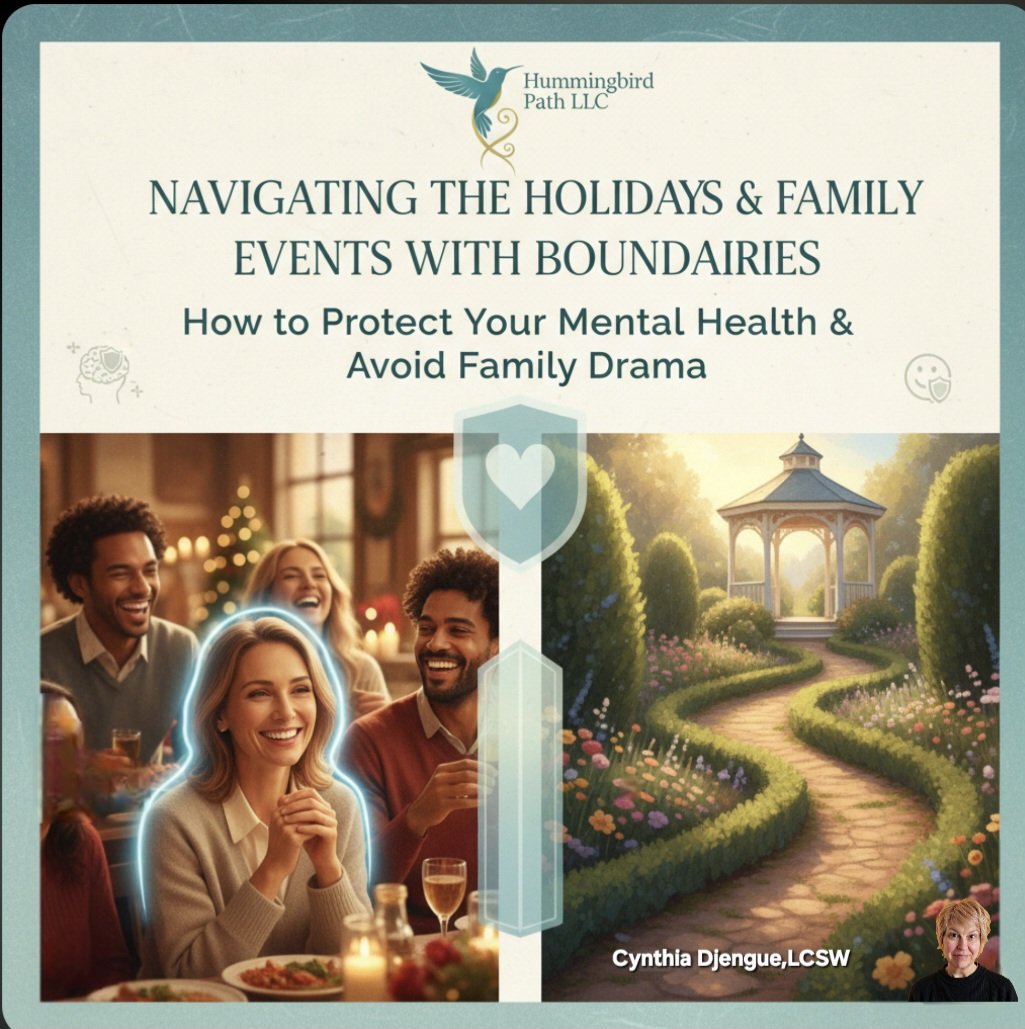
Navigating the Holidays or Family Events with Boundaries: How to Protect Your Mental Health and Avoid Family Drama
What you can do now to prepare
The holiday season can feel like a balancing act. For many, it’s a time of joy, tradition, connection, and celebration, but for others, it brings up feelings of anxiety, stress, and a sense of obligation. The pressure to please everyone, coupled with unresolved family dynamics and lingering childhood trauma, can make this time of year especially difficult. If you've ever found yourself torn between showing up for family gatherings or protecting your own mental well-being, you’re not alone. The question often arises: Do I have to attend family events if I don’t feel comfortable?
When the holidays bring up old wounds, whether they’re political differences, outright disrespect, or addiction-related challenges, it’s normal to question the necessity of being there. It’s important to remember that it’s okay to set boundaries, even if those boundaries involve saying no to attending events or deciding not to invite someone who may harm your peace of mind.
Mindfulness vs. Denial: Staying Present Without Being in Denial
There's a difference between mindfulness, being able to stay present in the face of difficulty, and being in denial about the “pink elephant” in the room. If you know there’s unresolved tension, conflict, or dysfunction at a family gathering, it’s not about avoiding the discomfort; it’s about recognizing your right to protect yourself from unnecessary harm. Mindfulness means facing what’s in front of you without pretending it isn’t there, while denial means ignoring the reality of the situation, which often leads to more pain.
Sometimes, the most mindful choice is not attending an event you know will trigger your anxiety, because that’s the one thing you can control. Not every situation requires you to endure discomfort for the sake of family unity.
When is Confrontation Ever Comfortable?
If you have anxiety, the thought of confrontation can feel paralyzing. You might imagine that saying no or setting a boundary will lead to conflict, rejection, or even ostracization. The reality is that setting boundaries may cause discomfort, not just for you, but for the people who are used to you playing a certain role in the family dynamic. And while this may feel scary, it’s a necessary part of self-care.
The truth is, confrontation will rarely feel comfortable. But discomfort doesn’t equate to danger, and you have every right to protect your peace. If you're terrified of the fallout, remember that standing up for yourself isn’t a form of attack. It's an invitation for change, not only for you but for the family system as a whole. When you change your role, others will be forced to notice, and yes, that may cause ripple effects. But guess what? That’s how real change happens.
The Fear of Change: Why Anxiety and ADHD Make Boundaries Harder
If you struggle with anxiety or ADHD, the thought of breaking family patterns can feel overwhelming. You might fear that by saying no, you’ll trigger a bigger storm or somehow cause a rupture in the family. These fears are valid. However, the reality is that avoiding change doesn’t protect you from the discomfort - it only prolongs it.
When we stay stuck in dysfunctional family roles, we prevent ourselves from growing and evolving. Yes, it’s uncomfortable to challenge the status quo, but it’s essential for your mental health and overall well-being. The cost of staying in a toxic environment for the sake of family harmony often outweighs the temporary discomfort of setting boundaries and clear expectations for your family relationships.
Five Reasons to Uphold Your Boundaries, Especially Around the Holidays
Mental Health Protection: The holidays can amplify both positive and negative emotions. If you know an event will trigger anxiety, stress, or painful memories, it’s okay to stay home. Protecting your mental health is paramount.
You can’t Control Others: You can’t control your family’s behavior, but you can control how you respond. Setting clear boundaries means acknowledging that you have the right to decide what’s acceptable in your life, even if others disagree.
The Fear of Conflict Isn’t Enough to Stay Silent: It’s natural to fear upsetting others, but the cost of sacrificing your well-being to avoid conflict can be high. Staying silent might keep the peace temporarily, but it often comes at the expense of your own peace.
The Risk of Change is Worth It: If you’re ready to step outside your usual role in the family dynamic, be prepared for change. Even though this feels scary, it can lead to healthier relationships, clearer boundaries, and less emotional chaos in the long run.
You Deserve to Feel Safe: It’s essential to create environments where you feel emotionally and mentally safe. Whether that means skipping a holiday event or not inviting someone, choosing peace over drama is a form of self-respect.
Why Therapy is Key to Preparing for Your Holiday or Family Event Experience
Facing these challenges isn’t easy. Therapy can be an invaluable resource for preparing yourself to set boundaries, manage anxiety, and navigate complex family dynamics. A therapist can help you understand your triggers, develop coping strategies, and provide emotional support as you practice asserting yourself.
When you work with a therapist, you gain clarity on your needs, strengthen your resilience, and learn how to face tough family situations with more confidence. The holidays don’t have to be a time of overwhelming stress. With the right tools, you can create a holiday experience or family event that feels authentic to you, one that honors your boundaries and supports your emotional well-being.
In conclusion, you don’t have to attend family events if you don’t feel comfortable. Boundaries are essential for maintaining your mental health, especially during a season that can bring out old patterns and triggers. It’s not easy to make these decisions, but it is necessary for your well-being. Remember: Your peace is important, and you have the right to protect it.
Your peace is important, and you have the right to protect it. - Cynthia Djengue, LCSW
