

57 somatic techniques for nervous system regulation
Somatic techniques are helpful for nervous system regulation. These techniques are human body-based practices that help a person become more attuned to physical spots in the brain, or where stored stress and trauma are located in the body. They are rooted in the understanding that the body and mind are deeply interconnected, and that by addressing the physical, one can also heal the emotional and psychological aspects.
It is one of the reasons I became certified in Reiki, HeartMath, and Brainspotting. Talk therapy does not always resolve or release the trauma from the body. This is when somatic techniques can be used as another option for release and healing.
This is a comprehensive list of 100 somatic techniques categorized for use in therapy and for self-directed healing.
Foundational Somatic Practices
These are core skills that underpin many other techniques.
Body Scan: A mindfulness practice of bringing attention to different parts of the body to notice sensations, tension, or feelings. Move from top of the head to the bottom of feet.
Conscious Breathing: Simply paying attention to the inhale and exhale without trying to change it.
Diaphragmatic Breathing (Belly Breathing): Breathing deeply into the abdomen to activate the parasympathetic nervous system.
4-7-8 Breathing: Inhale for 4, hold for 7, exhale for 8. A calming breathwork technique.
Box Breathing: Inhale for 4, hold for 4, exhale for 4, hold for 4. Visualize going around a box for each 4 count. Calming.
Physiological Sigh: Two quick inhales followed by a long, slow exhale. Effective for immediate stress relief.
Pendulation: Dr. Levine discusses gently moving attention between a difficult or activated sensation and a neutral or resourced part of the body. Contracting. Expanding.
Titration: Dr Levine also shares how to work with small, manageable amounts of a difficult sensation or emotion at a time to prevent overwhelm.
Grounding: Feeling the connection of your body to the earth, such as feeling your feet on the floor.
Orienting: Slowly looking around a room and noticing objects without judgment, helping to feel safe and present.
Sensing into a resource: Focusing on a part of the body that feels good, safe, or neutral to create a sense of calm. A resource spot is what Dr. David Grand identified when he began Brainspotting therapy. He describes it in his book as, “I use the Brainspotting "Inside Window" technique to find the "Resource Spot" (this is straight out of the training): I have clients scan their bodies for a place that's grounded, strong, relaxed, connected.”
Movement & Embodied Expression
Movement can help release trapped energy and promote a sense of flow and ease.
Free Movement/Embodied Dance: Moving intuitively to music or in silence, allowing the body to express itself.
Shaking: Gently shaking the body to release stored tension and nervous energy.
Yin Yoga: Holding gentle stretches for longer periods to release tension in connective tissues.
Qi Gong: A practice of coordinated body posture, movement, and breathing for health and spirituality.
Tai Chi: A slow, flowing martial art that promotes balance and relaxation.
Stretching: Gently stretching muscles to release physical tension.
Progressive Muscle Relaxation: Tensing and then releasing different muscle groups throughout the body to notice and let go of tension.
Walking: Mindfully walking, noticing the rhythm of your steps and the feeling of your feet on the ground.
Swinging arms or legs: Gentle, rhythmic swinging to release nervous energy.
Rolling the shoulders: Slowly rolling shoulders forward and backward to release neck and upper back tension.
Neck rolls: Gently rolling the head to one side and then the other to release tension in the neck.
Spinal twists: Gentle twists while sitting or lying down to mobilize the spine and release tension.
Cat-Cow stretch: A gentle yoga pose to free up the muscles and joints of the back.
"Moving conversations": Partner or group exercises that involve a conversational movement experience.
Self-Touch & Sensory Techniques
Using intentional touch and the five senses to soothe and ground the nervous system.
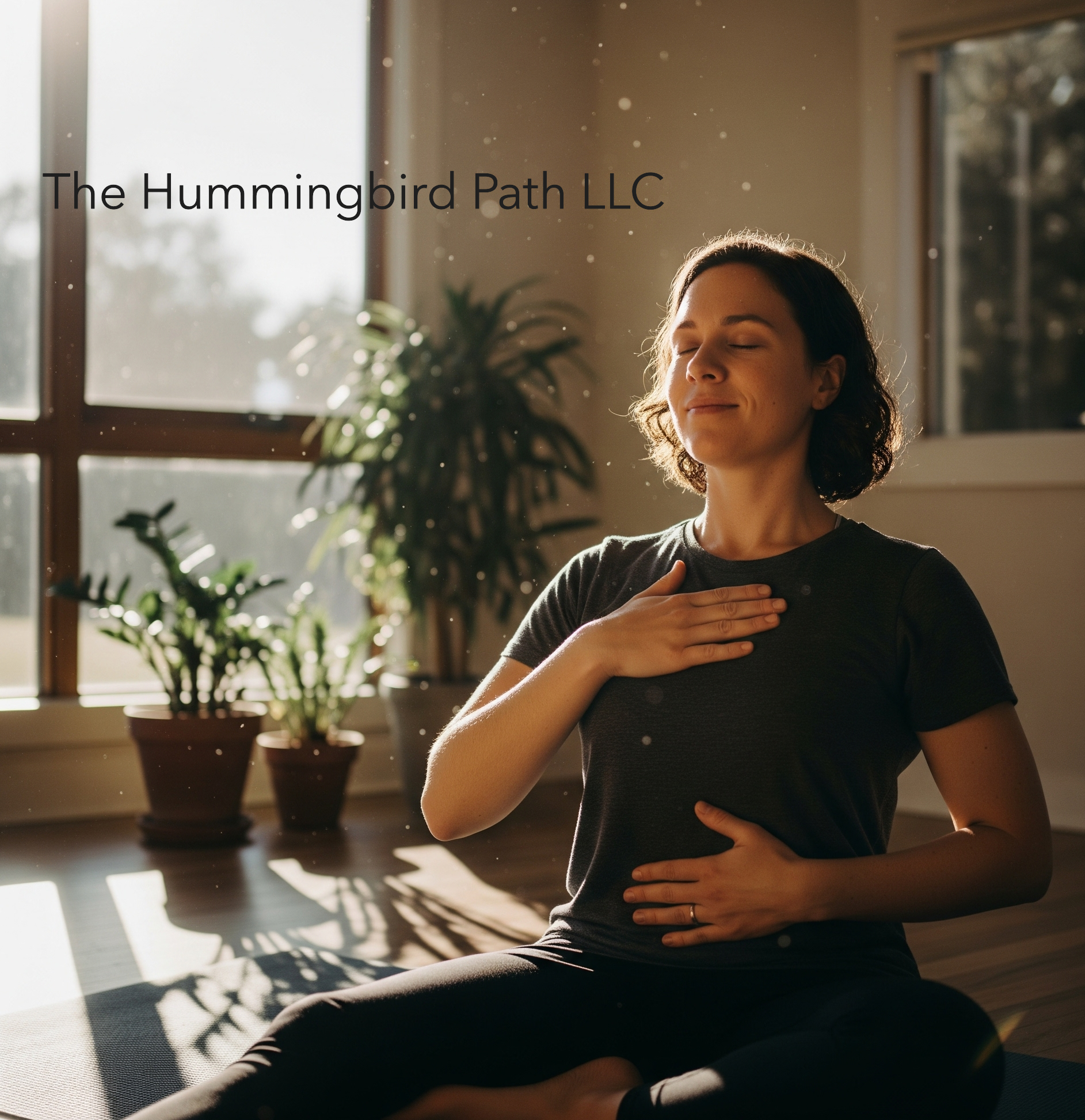
Self-Holding/Butterfly Hug: Placing one hand on the heart and one on the abdomen, or hugging yourself, to provide deep pressure and a sense of safety.
Hand Massage: Gently massaging your own hands, focusing on the sensations.
Foot Massage: Massaging the feet to relieve tension and ground yourself.
Head and Neck Massage: Gently rubbing the temples, neck, and scalp to release stress.
Placing a hand on a tense area: Gently placing your hand on a place where you feel tension or discomfort to bring awareness and comfort to that area.
Using a weighted blanket: The deep pressure touch can activate the parasympathetic nervous system.
Holding an object: Holding a soft object, a smooth stone, or a comforting item to provide a sense of security.
Feeling different textures: Actively touching objects with varying textures like a soft blanket, a rough stone, or a smooth wooden surface.
Cold water exposure: Splashing cold water on the face, taking a cold shower, or holding an ice pack on the neck to stimulate the vagus nerve.
Gargling with water: The action of gargling stimulates the vagus nerve.
Humming, Singing, Chanting: Creating vibrations in the vocal cords and throat to stimulate the vagus nerve.
Listening to soothing music: Music can be used to alter mood and promote relaxation.
Savoring a taste: Mindfully eating a small piece of food, focusing on its flavor, texture, and smell.
Smelling a calming scent: Using aromatherapy with scents like lavender or frankincense to soothe the nervous system.
Tuning into sounds: Listening to the sounds in your environment, both near and far, without judgment.
Visual & Imagery-Based Techniques
Using the power of visualization and imagination to influence your physical state.
Creating a "safe place" visualization: Imagining a place where you feel completely safe and calm, and noticing the physical sensations that arise.
Observing colors: Naming colors of objects in your environment to ground yourself in the present moment.
Ideokinesis: Using imagery to facilitate a shift in the way you sense and release physical weight and tension.
Visualizing a calming scene: Imagining a peaceful landscape, like a forest or a beach, to reduce stress.
Finding five things or colors you can see: A classic grounding technique that brings you into the present moment.
Vagus Nerve & Polyvagal Theory Techniques
Practices specifically designed to stimulate the vagus nerve and promote a state of "rest and digest."
Diaphragmatic Breathing: (Already listed, but key for vagal stimulation).
Gargling: (Already listed).
Humming/Singing/Chanting: (Already listed).
Cold Water Exposure: (Already listed).
Earthing/Grounding: (Already listed).
Mindful Eye Movement: Slowly shifting your gaze from side to side without moving your head.
Yawning: Allowing yourself to yawn fully, which can help reset the nervous system.
Listening to calming frequencies: Specific frequencies, such as those found in binaural beats or certain types of ambient music, can promote relaxation.
Trauma-Informed Techniques
Techniques often used in therapeutic settings to address the physical effects of trauma.
Resourcing: Identifying and connecting with internal or external sources of strength and safety.
Containment: A mental practice of imagining placing overwhelming thoughts or feelings into a container to be addressed later.
Sequencing: Gently allowing the body to complete incomplete movements or survival responses (e.g., a trembling or shaking that was suppressed).
Un-shaming the body: A practice of consciously accepting and non-judgmentally observing all physical sensations.
This list provides a solid foundation, and each of these can be explored in numerous variations. For example, "grounding" can be done by feeling your feet, but also by feeling your sit bones, your back against a chair, or your entire body against the bed. "Self-touch" can be a hug, a hand on the forehead, a gentle tap on the shoulder, or a self-massage. The key is to experiment and find what feels right for you and your body in any given moment.
Feel free to Contact Me if you have any questions about these techniques, or if you would like to spend some dedicated time in a session focusing on relaxing your body using somatic techniques. I’m here to support you on your journey toward greater calm and healing.
Somatic techniques for nervous system regulation
