

What I learned in Bali - Brainspotting Intensive Training, April 2026
What to Know about Brainspotting Intensives
In general:
Brainspotting Intensives are 5‑day, small‑group, master‑class format where each participant is both therapist once and client once, with the trainer sitting next to the therapist and doing in‑depth debriefs.
Intensives are framed as an “ultimate learning” or “master class” experience to deepen advanced clinical Brainspotting skills and dual attunement, often tied to certification requirements.
Expansion Brainspotting (sometimes called Expansion/Expansive) is written about as using Brainspotting not only for distress but also to access positive states, strengths, and aspirations, often integrating mindfulness/visualization. This is a technique only taught at this level.
Bali, Indonesia greeted us with humidity, incense, and the low hum of scooters, but inside our training room the focus was on another kind of movement: the brain and body in deep processing. For five days, April 14–18, a small group of therapists from the United States and Indonesia gathered for an Intensive Brainspotting training unlike any other I’ve attended.
For the Intensive in Bali, each of us had the opportunity to sit right next to Marie-Jose as she walked us through advanced setups (including her double spotting), and then debriefed, at length, each session, technique, and why she chose the technique.
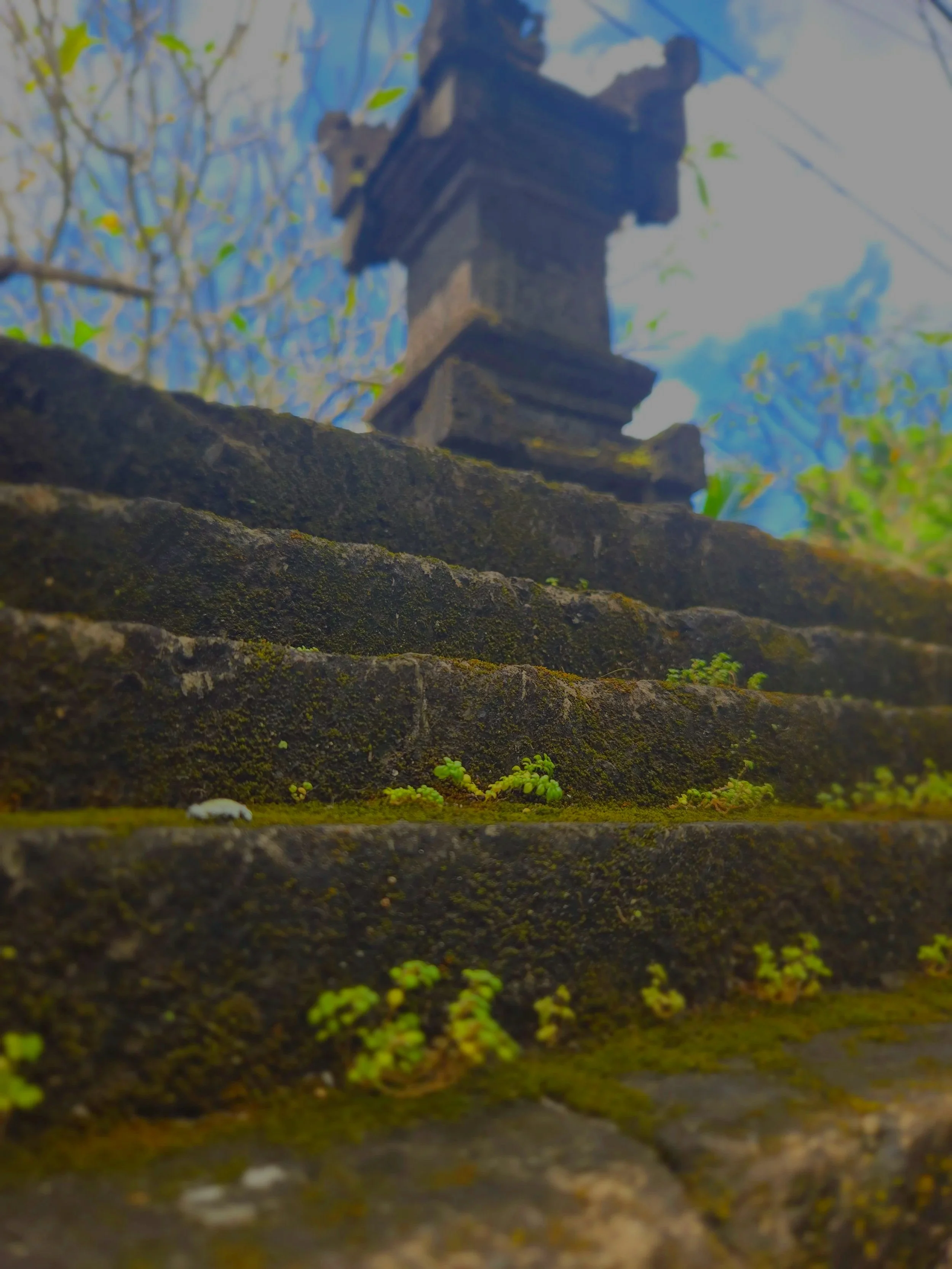
Green moss, Temples, Gods, Goddesses, Streets where incense is burning. Bali, Indonesia.
My personal Brainspotting background
Several of us in the room had ADHD, myself included. When I signed up, my biggest fear wasn’t the depth of the work, it was “How the hell am I supposed to sit in a chair and pay attention for five straight days?” But here’s the weird thing about Brainspotting: when you’re in it, time stops behaving normally. Sessions that should feel endless somehow don’t. Your brain is busy, your body is busy, and the clock just…slips.
I came into this Intensive already trained in Brainspotting Levels I, II, and III, with my Level III taught by Brainspotting’s founder, Dr. David Grand. I expected a review and a few new refinements. Instead, this was a full immersion - no slides, no handouts, just live demonstrations, case consultations, and real sessions. It felt less like a workshop and more like an apprenticeship.
Learning from Marie-Jose Boon
The training was led by Marie‑Jose Boon, hosted by Brainspotting Indonesia with Ine Indriani, M. Psi, Psikolog. Marie-Jose has been with Brainspotting International for years and has known Dr. David Grand since the early days of the modality. Watching her work was like seeing Brainspotting’s principles come alive in real time - subtle, attuned, spacious, and incredibly precise. Without a printed manual, her presence and clinical intuition were the guide.
I was appreciative of her teaching background which was obvious in her style and authority. I would also note that Ine, Brainspotting Bali, was a quiet current of strength and kindness as the assistant trainer and organizer. She was often interpreting for the Americans and the Indonesians. Many of us were curious how Indonesia psychotherapy works - the education, licensure, and Brainspotting training. Ine has done an incredible job of training many in Indonesia. I was impressed with the high number of Indonesians present.
The Unique Structure: Therapist and Client
One of the most powerful aspects of this Intensive was that each of us worked in both roles: therapist and client. As therapists, we brought our complex cases, our questions, and our doubts. As clients, we brought our own nervous systems; our histories, our triggers, our grief. Working both sides of the chair created a level of trust and intimacy that can’t be replicated in lecture-style learning.
Sitting in the client chair, I was reminded how the body and brain are not always connected in intention. I intended to not necessarily talk about the past, rather focus on the future, my goals, personally and professionally. But, what took place almost immediately was the back pain I began to experience. Wow, I could not comfortable, and at times that back pain became worse, intense, and Marie intuitively asked a participant to come over and place her hand on my back. That feels good, better, I said. Another participant relieved the other one, and did the same. I felt an on/off pain response while I processed. Again, Marie seemed to intuitively know, and asked me if I wanted to stand. YES! Yes, I would like to stand, move this around, maybe even out, that feels better. I felt free, unrestricted, as I processed and let the pain move out. It was a unique and profound experience. I have not had back pain since (as I write this about a month later).
It deepened my empathy for the moments when clients go quiet, lose words, or need more time. As a therapist, I noticed myself slowing down, trusting the process even more, and allowing others to do some of the heavy lifting. Others literally had me back, and I could label that as healing, feeling the effects far beyond those five days.
No Handouts, But Deep Structure
There were no printed manuals or step‑by‑step guides in this Intensive. Instead, the structure came from the work itself. Each day built on the last, moving through techniques from all levels -resourcing, advanced setups, work with highly activated material, and more - woven together through live sessions and debriefs. The training felt “handmade” in the best way, tailored to the group and to the real people in the room.
Some of the themes:
Working with stuckness - physical, emotional, patterned or habitual behavior, or child trauma
Deepening attunement and presence - the reason I was drawn to Brainspotting. It feels like reiki in this sense. A client or therapist cannot deny the spiritual aspect
Supporting the body’s natural drive toward resolution - I personally was able to experience both pain and release of it. This won’t necessarily happen to everyone. For others it could be feeling tired, depressed, simply out of balance. But, the body knows how to repair
Taking care of the therapist’s nervous system - this was the benefit of an intensive, learning and being treated by a consultant & expert
Cross‑Cultural Group: US and Indonesian Therapists
I highly encourage other therapist to get out of the country to do a training at this level. It was my intention to choose Indonesia in order to learn how Brainspotting could cross cultures and languages.
Our group included therapists from both the United States and Indonesia, and that diversity added so much depth. Even though we practice in different cultures and systems, the themes that emerged -trauma, grief, identity, attachment - were profoundly universal. It was moving to see how Brainspotting could hold all of that complexity across languages and backgrounds.
Communities are in crisis around the world. Brainspotting is not just a therapeutic technique, but it has a humanitarian mission project, Brainspotting Help, to assist individuals and communities around the world who are in crisis. People in these communities may be eligible for free sessions.
Takeaways for Clinical Work
I left Bali both softer and stronger; softer in my expectations of myself and my clients, and, stronger in my trust of the Brainspotting process. This Intensive reminded me that the most powerful “technique” is still attuned presence. The protocols matter, but who we are in the room matters even more.
For clients, this means I’m bringing back not just new tools, but a deeper embodied understanding of what it’s like to do this work from the inside out. If you are curious about how Brainspotting might support your healing, feel free to reach out with questions.
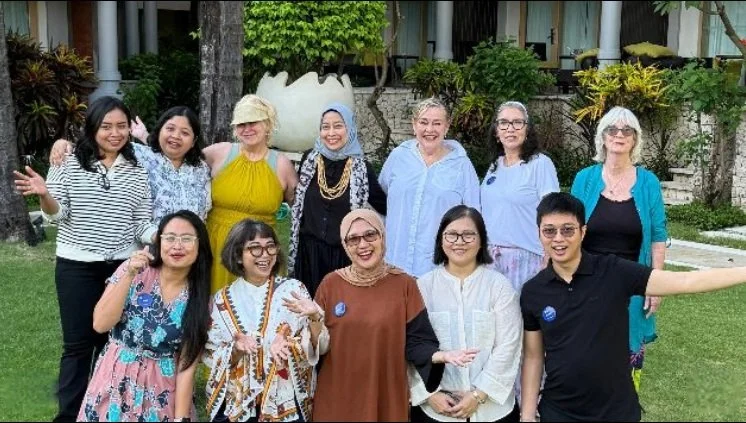
Cynthia Djengue, LISW, LCSW is pictured in the back row, 3rd from the left in hat and yellowish dress. Brainspotting Indonesia training in Bali, Indonesia. April 14-18, 2026.
